You Won’t Believe What These Stunning Mid-Century Ottomans Can Do for Your Space

Key Ideas
- Understand the basic tenets of mid-century design to better appreciate the simple beauty of mid-century ottomans. Featuring an aesthetic focus on minimalism, organic shapes, and industrial materials, these pieces enhance the fluid connection between the inside and outside.
- Consider opting for a mid-century ottoman with unique construction techniques and materials. Authentic pieces highlight some of the finest furniture eras, woods, and upholstery made to last, with unmatched quality and craftsmanship that thrives above today’s reproductions.
- Midcentury ottomans shine because of their unique design aesthetics. They have geometric shapes, clean lines, and vibrant colors and can be some of the most versatile pieces in modern interiors.
- Mid-century style ottomans are genuinely versatile pieces. They offer additional seating and serve as fashionable storage marbles, creating more form and function in any living room.
- Suppose you’re interested in an authentic mid-century ottoman, zero in on its essential features—especially the absence of Ikea!—and the provenance. Look for the five most common traps that confuse unsuspecting vintage furniture shoppers.
- Integrating mid-century ottomans into contemporary design can be achieved by considering scale, color coordination, and the overall theme of your space, creating a cohesive and inviting environment.

- OTTOMAN FOOT REST: Enhance your living space with our luxurious faux leather footstool. Its fully upholstered design exudes elegance and sophistication, adding a touch of glamour to any room
- RECTANGLE OTTOMAN DIMENSIONS: Measuring at 18.5″ x 18.5″ x 16.5″ (H), this footstool offers a compact yet comfortable seating option. Its versatile size allows for easy placement in various areas of your home
- LIVING ROOM OTTOMAN: Sturdy and supportive, this footstool has a weight capacity of up to 250 lbs, providing a reliable and secure seating experience for anyone in your household
- FAUX LEATHER OTTOMAN CARE & CLEANING: With easy maintenance in mind, this footstool is spot clean only. Simply treat any spills or stains promptly to ensure its pristine appearance and longevity
- TUFTED OTTOMAN: Weighing in at 14.3 lbs., this footstool is lightweight and easy to move around. It offers convenience and versatility, allowing you to reposition it according to your changing needs and preferences
Last update on 2026-03-23 / Affiliate links / Images from Amazon Product Advertising API
A mid-century ottoman from NYT Furniture is a perfect solution for improving the style and functionality of your home. This ottoman is distinguished by its simple style and understated design.
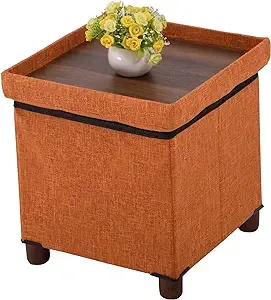
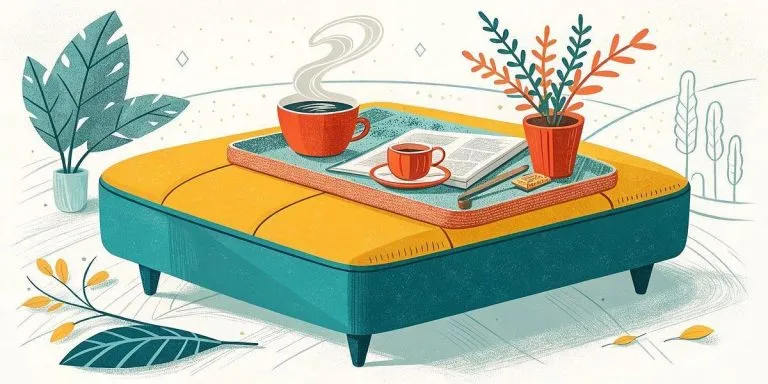
Adding a tray on top can double or triple the function of extra seating, a footrest, or a coffee table.
Much of the work comes in homey designs employing wood and upholstered fabric, warmly inviting comfort with practical usability.
You’ll discover various shapes and colors, perfect for meeting your style and complementing your current decor.
When you choose a mid-century ottoman for your home or office, you’ll have a seating option that welcomes guests while promoting the same feel of classic charm.
What Defines Mid-Century Ottomans?
Mid-century ottomans exemplify a versatile design that values clean lines and multi-purpose functionality, making them a stylish addition to any space.
Understanding these factors helps to appreciate how they influence the perfect ottoman’s design and intent.
1. Understand Mid-Century Design Principles
Minimalism took center stage in mid-century design, resulting in pieces that focused on simple forms with little to no decoration.
This ethos erupts in ottomans, which cultivate an organic alignment with cradle forms and natural figures, welcoming warmth and intimate comfort into everyday living environments.
Teak, walnut, and oak display a rich focus on organic materials, which are reflected in gorgeous natural wood veneers.
That relationship with the exterior makes all the difference, and mid-century designs nailed that transition.
These creations naturally enhance an open, airy atmosphere that invites repose.
2. Identify Key Materials and Construction
Mid-century ottomans are characterized by their construction from common materials, like wooden legs and an upholstered top.
Leather has traditionally been a big player in their design.
Their authenticity shines through in durability and craftsmanship, distinguishing an original from a reproduction.
Superior craftsmanship means that you can depend on these ottomans’ unrivaled quality whether you use them as extra seating, for everyday relaxation, or as stylish table space.
3. Recognize Distinguishing Design Elements
What sets mid-century ottomans apart are their exceptional characteristics, such as richly textured finishes, brilliant shades, and tonal patterns that complement their surrounding environment.
These pieces’ effects, proportions, and scale are well-designed, adding to their artistic beauty.
Additionally, the legs and their bases generally indicate a balance between grace and strength, helping to illustrate their personality even more.
Mid-Century Ottoman Design Aesthetics
Mid-century Ottoman designs perfectly demonstrate sleek aesthetic beauty that meets refined purposes. Their aesthetics dramatically affect a room’s vibe, simultaneously making spaces cheerful and sophisticated.
The shapes and elegance present in these works result from devotion to craft simplicity.
This approach to art enlivens the practice of creation itself.
Geometric Shapes and Clean Lines
Geometric forms reign supreme in mid-century Ottoman design, providing a bold style statement.
Clean lines create a streamlined look that fosters a minimalist design, making rooms appear more spacious and orderly.
Take, for example, their famous Eames Lounge Chair and Ottoman, with its eye-catching curves that articulate and legitimize the mid-century aesthetic.
Geometry increases beauty and improves the perception of space, which makes rooms appear even more significant.
- Mid-century retro modern ottoman
- Faux Leather upholstery
- Finishing: dark walnut
- Removable Cushions in distressed faux Leather
- Smooth wood frame and legs
Last update on 2026-03-23 / Affiliate links / Images from Amazon Product Advertising API
Emphasis on Natural Materials
Natural materials are a key component of mid-century Ottoman design, emphasizing sustainability and a connection to nature.
Enabling both tactile and visual explorations, the warm quality of wood, contrasted with the softness of leather, introduces the elements of touch, beauty, and storytelling.
Natural and rich materials add warmth and patina, which make people feel good, evoke memories, and welcome people in.
Functionality Meets Style
Mid-century ottomans are a perfect way to combine practical function with beautiful decor.
They balance form and function, offering sculptural qualities and detailed beauty alongside the comfort that made them famous.
Numerous designs incorporate ingenious storage options, making them functional heroes while still aesthetically fabulous.
The Egg Chair and matching ottoman perfectly encapsulate that marriage, showing that beauty and function can work harmoniously.
Victorian Ottoman: A Detailed Look
The Victorian period (1837-1901) promoted lavish, highly decorative pieces in all furniture, particularly ottomans, which exemplified the era’s elegance.
This period shone under a spell of opulence, with furniture and exceptionally stylish ottomans exuding claims to luxury and sophistication, making every piece a perfect addition to any design project.
Defining Characteristics of the Victorian Era
Victorian furniture is known for its heavy, exaggerated forms, intricate ornamentation, and eye-popping color.
This craftsmanship refers to when artisans focused on symmetry and proportion, designing beautiful, balanced spaces.
New cultural influences from the Industrial Revolution opened the door to new techniques and technology, building confidence in the era’s complex designs.
Common Materials in Victorian Ottomans
Victorian ottomans were mainly made of durable hardwoods such as mahogany and oak.
The upholstery was an important aspect, often utilizing rich, luxurious fabrics like velvet and brocade.
Ornamental woodwork usually drew fine artistry, and the quality of the materials ensured its eternal life, establishing its worth through the decades.
Victorian Ottoman Design Elements
Signature design hallmarks make their mark with abundant velvet upholstery embellished with opulent prints and inimitable embellishments, many borrowed from the natural world.
The emphasis on scale and proportion helped make these ottomans the guilty pleasure of larger Victorian furniture, improving the decoration of the whole room.
Victorian ottoman prices can differ, with the average selling for $1,943.
The price range from $900 to $2,800 can vary depending on the designer, materials, and condition.
Deliveries are typically made between 9 and 5.
Privately run services like UPS and FedEx also make these deliveries, keeping the packages unopened and, I suppose, in mint condition.
Louis XV Ottoman: A Detailed Look
The era of Louis XV (1715-1774) had a profound influence on Ottoman design. It ushered in an era of beauty and grace that revolutionized creativity across the area.
This period saw the rise of ornate furniture that epitomized the Rococo style, characterized by playful curves and intricate details.
Ottomans turned French aristocratic interiors into tableaux of sophistication and opulence. They conveyed these new ideas and practices functionally and as status symbols—suddenly luxury.
Defining Characteristics of the Louis XV Era
The hallmarks of Louis XV’s furniture were undulating, curvy lines and an emphasis on comfort.
The Rococo style played a significant role in these designs, ushering in the fashion of delicate florals and playful movements.
Culturally, this era celebrated artistry and craftsmanship, leading to furniture trends emphasizing individuality.
Curves and asymmetry further enrich the aesthetic, lending visual dynamism and a sense of movement to each piece.
Common Materials in Louis XV Ottomans
Louis XV ottomans are well constructed from solid woods such as oak and walnut. Historically, the best of these prodigious works were fancifully upholstered in silk, satin, and sumptuous velvet.
What’s essential about these materials is that they helped communicate grandeur.
Gilding and fretwork significantly increased their splendor, and gold leaf killed the glare and enhanced their beauty.
The fabric and finish selections changed each ottoman’s gracefulness and glam factor.
Louis XV Ottoman Design Elements
Floral patterns and complex wood carvings incorporated into the upholstery are recognized design features of Louis XV ottomans.
While highly decorative, these curvy cabriole legs keep the piece incredibly stable and add to the delicate look of the design.
Skilled craftsmanship is the foundation of the craft. It ensures that every piece expresses that era’s focus on beauty and craftsmanship.

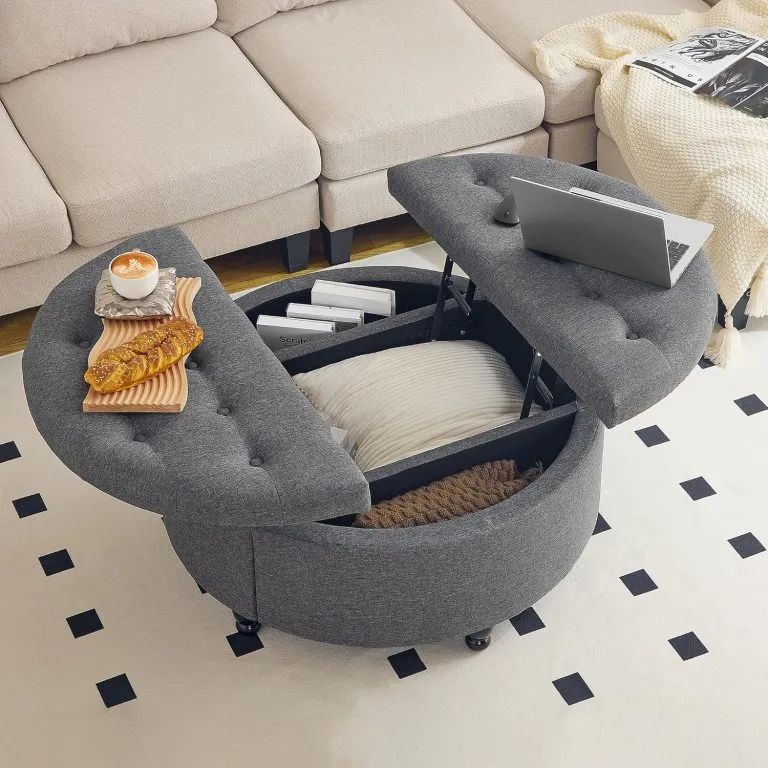
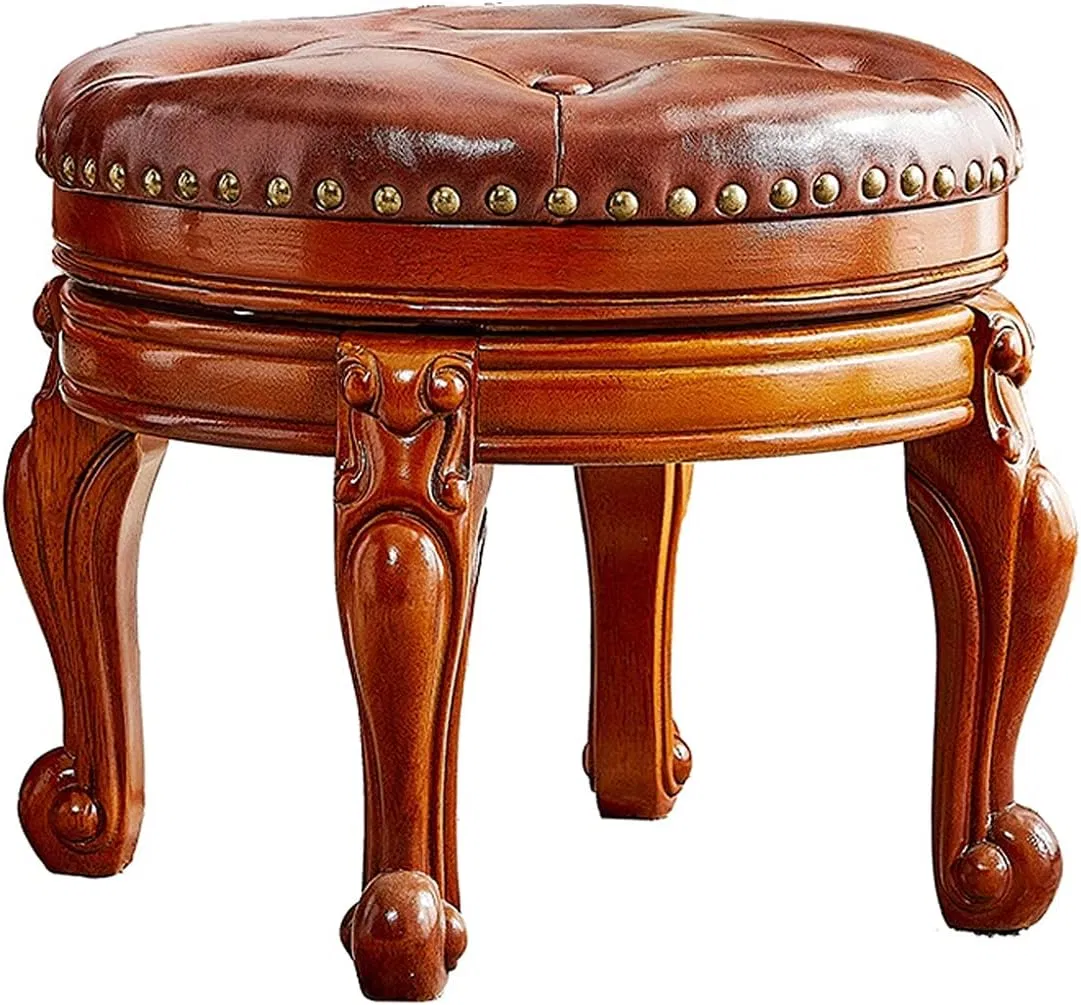
- ROYAL ANTIQUE STYLE – Our half moon ottoman features fashionable button tufting on top, nail-head trim along the edge for eye-catching elegance, and contrasting black legs. Enhance the look of your home with this antique Victorian vanity bench from Homebeez
- VERSATILE USE – Hidden storage ottoman can reduce mess for your living spaces: living rooms, bedrooms, hallways, entryways, closets and nurseries. Can be used as a non-traditional coffee table ,bed bench, storage chest, window bench, shoe bench etc
- STABILITY & SAFETY – Half circle ottoman beautifully crafted with sturdy wood frame as well as wood finished legs, which ensures our entryway bench can support up to 360 lbs of weight . moreover, the exquisite safety hinge can prevent lid from slamming shut on fingers
- SOFT & COMFORTABLE – Use high-grade faux leather, bring a luxurious look to your living room.50mm thickened sponge upholstered button tufted padding gives great seating comfort.
- EASY TO ASSEMBLY – Convenient design makes it simple for you to install the 4 legs within few minutes. It can also be easily moved away when not in use.Wedge bench measured by 43.5″L x 19.1″W x 17.5″H. Inner size:39″L x15.2″W x9.4″H.
Last update on 2026-03-23 / Affiliate links / Images from Amazon Product Advertising API
Style Differences: Mid-Century vs. Victorian vs. Louis XV
Mid-century, Victorian, and Louis XV styles showcase a variety of styling contrasts. They reflect the cultural values and material innovation of their time while offering functional and stylish ottomans for modern spaces.
Compare Design Philosophies
| Style | Design Philosophy | Cultural Reflection | Innovation Role | Historical Influence |
|---|---|---|---|---|
| Mid-Century | Minimalism and functionality | Emphasis on modernity and practicality | Focus on simplicity and utility | Post-war optimism |
| Victorian | Ornate and elaborate | Expression of wealth and social status | Craftsmanship in decorative arts | Industrial Revolution |
| Louis XV | Curved lines and elegance | Affluence and artistry in furniture design | Use of luxurious materials | Rise of French art and culture |
Mid-century style, with its clean lines and lack of ornamentation, embodies the less is more pragmatic thinking that characterized post-war living.
Victorian architecture sparkles with ornamental details that display the riches of the Victorian period.
Louis XV is enchanted with soft curves and sumptuous materials.
These philosophies are reactions to what has transpired, but disruptive creativity has often been the catalyst for shifting paradigms in design.
Material and Construction Variations
| Style | Materials Used | Durability | Craftsmanship Techniques | Construction Quality |
|---|---|---|---|---|
| Mid-Century | Wood, metal, upholstery | High | Mass production | Streamlined and efficient |
| Victorian | Mahogany, velvet, brass | Medium | Hand-carved, intricate details | Elaborate and time-consuming |
| Louis XV | Walnut, silk, gilded accents | High | Handcrafted, delicate forms | Exquisite and durable |
The quality of materials affects each style’s durability and aesthetics.
Material choices play a significant role in defining the character of each style.
Mid-century ottomans typically utilize lightweight materials that work in today’s functional lifestyle, contrasting with the robust textiles of the Victorian era.
Louis XV’s craftsmanship accentuates the period’s unrivaled artistic mastery.
Functional Differences
| Style | Intended Use | Practicality in Modern Spaces | Versatility |
|---|---|---|---|
| Mid-Century | Seating and footrest | Fits well in casual settings | Multi-use as storage |
| Victorian | Decorative and formal seating | Limited in casual settings | Primarily decorative |
| Louis XV | Elegant seating | Adds sophistication | Primarily decorative |
The role of Ottomans has changed considerably over time.
Mid-century designs usually flow easily into contemporary homes and are highly versatile.
Victorian and Louis XV styles, though lovely, become less conducive to today’s environments.
Incorporate Ottomans into Modern Interiors
Integrating modern ottomans into contemporary interiors produces a double whammy of aesthetic appeal and function.
To effectively incorporate them into your design project, consider what the room is trying to achieve.
If you prefer a minimalist look, search for ottomans that are streamlined in design and color, such as petite ottomans or round storage ottomans.
For a fun, eclectic space, a bright, patterned pouf can be a real conversation starter.
Selecting the appropriate design is key here; a modern, minimalist style adds a great touch to modern interiors, just as a traditional, highly carved ottoman looks stunning in classic decor.
Scale and proportion are essential when choosing an ottoman. Ensure the size is suitable for your seating arrangement.
Even a big sectional can shine if a vast storage ottoman, acting as a coffee table, is added to the mix.
Petite, decorative poufs add function and flair to private, cozy corners. Accessorizing your ottoman makes it look more appealing on its own.
Utilize trays to display your favorite items or novels, enhancing their functionality.
Add layers of textiles with throws and decorative pillows to introduce comfort, texture, and a bohemian vibe, making your space complete with the perfect ottoman today.

- Bench-made home furnishing products carefully hand built by experienced craftsmen and women
- A sturdy frame of kiln-dried solid hardwood and 11-layer plywood for strength and support that will last
- Upholstered in high-quality woven fabric atop premium high-density flame-retardant foam for a luxurious medium firm feel
- Petite size is perfect as a footrest in front of a sofa, armchair, or home office desk
- Use the footstool as a little step to reach high places
Last update on 2026-03-23 / Affiliate links / Images from Amazon Product Advertising API
Mid-Century Ottoman Placement Ideas
- Use an ottoman before a sofa to double as a coffee table.
- Use it as a footrest in a reading nook.
- Position several small ottomans for flexible seating.
- Incorporate an ottoman into a hallway for a beautiful touch.
Functionality is important, so make sure your ottoman does double duty.
Ottomans always provide intimate little seating groups, like they’re made for a cocktail party.
As colorful decorative accents, they can infuse a bright hue or sculptural quality into your space.
Victorian Ottoman Placement Ideas
- Position an ottoman in front of a fireplace.
- Use it in a more elegant formal living room for an upscale decorative touch.
- Position it under the foot of a four-poster bed.
- Integrate it in a dining room for additional seating.
Incorporating modern ottomans into formal spaces enhances style and comfort.
Louis XV Ottoman Placement Ideas
- Place an ottoman in a luxurious hallway.
- Please place it in a traditional sitting room to counter all that fussy decoration.
- Place it at the center of a soaring great room.
- Create inviting seating areas with multiple ottomans.
Ottoman Material and Craftsmanship
In Ottoman craftsmanship, recreating pieces is about selecting the perfect material.
This choice affects not only the visual splendor but also the object’s longevity.
Carefully selected materials guarantee an ottoman that is as durable as it is fashionable, standing up to everyday life while making a striking design statement.
This is where skilled artisans’ reskilling comes into play. They masterfully command some of the finest materials available.
As such, they produce unique ottomans that brilliantly combine aesthetics with form and function.
Returning to the craftsmanship of these ottomans, this aspect heavily influences their beauty and utility.
Beautiful, well-made ottomans last generations.
When selecting materials, think critically about how their quality contributes to the design as a whole.
Wood Types and Finishes
Perhaps even more than the ottoman’s material, the choice of finish for the wood can completely change its aesthetics.
Choosing a glossy finish will emphasize a contemporary appearance, but a matte finish can offer a rougher, reclaimed aesthetic.
Choosing woods with naturally durable qualities, like cherry or walnut, is key to creating furniture that can withstand the test of time.
Protect wooden surfaces by dusting frequently and cleaning with wood-based cleaners.
Upholstery Fabrics and Textures
The first consideration in the design process is the fabric selection, which contributes to comfort and desired aesthetics.
Rich textures further enhance the visual drama, ensuring that this piece becomes a focal point in any room.
When picking out upholstery, look for colors and patterns that match your home decor.
Detailing and Embellishments
Typical detailing and embellishments found on ottomans include:
These ornamental features add beauty and flair to buildings while allowing for self-expression through various styles.
Opting for ottomans with one-of-a-kind detailing will bring more personality to your abode.
Evolving Functionality of Ottomans
The ottoman’s evolution has taken great leaps throughout the years.
At first, they were just functional footrests or an inanimate, decorative object. Today, this function has evolved to include even more storage solutions, extra seating, and, yes, even coffee tables.
This change symbolizes a more significant trend in contemporary design, where space-saving, multifunctional furniture is in higher demand than ever.
Such versatility becomes priceless in tight quarters, which often characterize urban living.
This is why Ottomans are such a boon to city residents.
Mid-Century Ottoman Uses
- Footrest for relaxation
- Additional seating for gatherings
- Coffee table alternative
- Stylish storage for blankets or toys
Relax in style with mid-century Ottomans. These ottomans let you put your feet up at the end of a busy day.
Additionally, ottomans can be practical places to tuck away items, helping your living room look neat and organized.
To get the most out of these multifunctional pieces, try topping them with a decorative tray for serving drinks or snacks.
Victorian Ottoman Uses
- Footstool for lounging
- Extra seating during parties
- Decorative accent in parlors
- Storage for games and books
Ottomans were status symbols during the Victorian era and enjoyed social engagements.
They provided not just a stylish addition to the decor but also a practical storage solution.
They offered an attractive place to put tired feet and served as convenient additional seating for visiting guests, making them the perfect ottoman for gatherings.
Incorporating a Victorian ottoman into your design project adds history and charm to your space.
You can use it as a chic coffee table or a cozy corner perch for unexpected parties, showcasing its versatility and functionality.
Louis XV Ottoman Uses
- Luxurious footrest
- Elegant seating in formal spaces
- Decorative accent in entryways
- Storage for fine linens
Louis XV ottomans are associated with traditional elegance, so they’re ideal companions for high-end, classy decor.
They add coziness to seating groupings and function as beautiful conversation starters.
Use them in contemporary settings. Combine them with more modern furniture pieces for a nice mix of old and new.
- Bench-made home furnishing products carefully hand built by experienced craftsmen and women
- A sturdy frame of kiln-dried solid hardwood and 11-layer plywood for strength and support that will last
- Upholstered in high-quality woven fabric atop premium high-density flame-retardant foam for a luxurious medium firm feel
- Petite size is perfect as a footrest in front of a sofa, armchair, or home office desk
- Use the footstool as a little step to reach high places
Last update on 2026-03-23 / Affiliate links / Images from Amazon Product Advertising API
Final Thoughts On Mid-Century Ottomans
Mid-century ottomans stand out for their singular style and multi-purpose function.
Their crisp lines and minimalist shapes make them versatile enough to complement any contemporary environment.
You can use them as footrests, extra seating, or even a trendy coffee table. The quality and craftsmanship of the materials ensure that their designs are beautiful yet long-lasting.
Each piece reflects a deliberate design evolution with a keen focus on innovative practicality and intentional artistry.
Discovering these unique ottomans gets your imagination flowing and creates an exciting, creative atmosphere throughout your home.
You can pair them with any style, color, and furniture texture. This approach looks charming and brings immediacy and coziness to your home.
Begin enhancing your space with a mid-century ottoman today.
Create a warm, inviting space that makes a statement about your style – with mid-century designs that feel classic and contemporary.
Mid-Century Ottomans Frequently Asked Questions
What are the key features of mid-century Ottomans?
Mid-century ottomans, often crafted from unusual materials and bright colors, exemplify the playful nature of the modernist design movement. Their clean lines and organic forms make them a stylish addition to any space, serving as the perfect ottoman for cozy corners or gatherings.
How do I identify a mid-century ottoman?
When choosing modern ottomans, consider tapered legs, geometric motifs, and a low profile. Genuine mid-century poufs use wood, leather, or fabric to highlight expert craftsmanship while remaining sleek and simple.
Can mid-century ottomans fit into modern interiors?
Besides the answer to that question being, “YOU!” Mid-century ottomans, such as stylish storage, pair beautifully with modern decor, lending the whole room a sense of nostalgia and flair. Their eye-catching, multifunctional design enriches style and productivity in contemporary spaces.
What materials are commonly used in mid-century Ottomans?
Other common materials are wood, leather, and upholstered fabric. These elements increase the storage ottoman’s strength and durability while contributing to its rich aesthetic, making it the perfect ottoman for any design project.
How has the functionality of ottomans evolved?
Modern ottomans were initially used as simple footrests and evolved into versatile design pieces. They can serve as coffee tables, provide additional seating, and act as storage ottomans, fitting seamlessly into the conveniences of modern living while maintaining their stylish character.
What distinguishes mid-century ottomans from Victorian and Louis XV styles?
While mid-century modern ottomans emphasize form, function, and simple beauty, Victorian and Louis XV styles celebrate ornate beauty and extravagance. Each style, with its unique design project, offers a diverse collection of aesthetics and one-of-a-kind craftsmanship that can enhance any space.
Where can I find authentic mid-century Ottomans?
Seek out trusted vintage furniture dealers, online platforms, and auctions focusing on modern mid-century design, including stylish poufs and contemporary ottomans. Be sure to check for authenticity with seller ratings and clear product listings.